

Settlement often focuses on the practical parts of building a new life: finding housing, employment, schools, healthcare, and community.
Those things matter. But there is another kind of settlement that can take much longer—the process of finding your sense of self, belonging, and emotional safety in a new place.
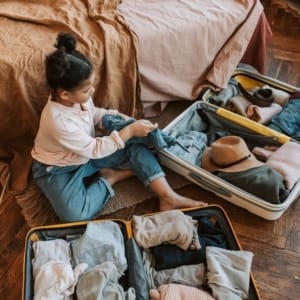 Immigration can bring experiences of:
- Grief for people, places, and traditions left behind
- Loneliness and difficulty feeling at home
- Cultural adjustment and questions about identity
- Changes in family roles and expectations
- Stress around parenting between cultures
- Experiences of discrimination or feeling like an outsider
- The emotional impact of previous trauma, loss, or instability
For some newcomers, the past can also continue to affect the present. Experiences of war, violence, abuse, poverty, or other significant adversity may leave emotional wounds that don’t simply disappear after relocation.
Sometimes, the question isn’t “Why am I struggling when things are finally going well?”
It is “What have I been carrying with me?”
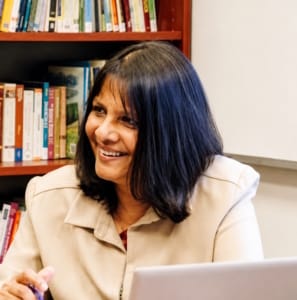 Amaranie Goonetilleke is a Registered Psychotherapist (Qualifying) who provides online therapy across Ontario. As a South Asian immigrant to Canada herself, she brings lived experience of cultural adjustment, loss, and building a life between cultures.
Her work is particularly informed by an understanding of how cultural and family expectations can shape the way we understand ourselves, our relationships, and our mental health.
Amaranie works with adults experiencing trauma, grief, life transitions, relational challenges, and cultural adjustment. She draws from approaches including Emotionally Focused Individual Therapy (EFIT), Internal Family Systems (IFS), sensorimotor approaches, and psychoeducation, adapting her work to each client’s needs.
Her goal is not simply to help clients cope with the challenges of relocation. It is to create space to understand what they have experienced, reconnect with themselves, and build a meaningful life in the place they now call home.